Skip to content

Cart

Your cart is empty

Rose Gold Bracelets: Purity, Fit and Style Explained

Rose gold bracelets bring a warm, distinctive tone to the wrist and a pinker alternative to yellow or white gold. Crafted from an alloy of pure gold mixed with copper and silver, this metal complements a wide variety of skin tones and personal styles. This guide covers alloy purity, solid versus plated options and how to get the fit right, so you can find a rose gold bracelet that suits your daily wear.

Charlotte Charlotte

The short answer

A rose gold bracelet is made by alloying pure gold with copper and a small amount of silver, which creates its characteristic pink hue. 18k offers a richer golden-pink warmth, while 9k and 14k contain a higher proportion of copper and silver, which makes them harder. Before you buy, check whether the piece is solid gold or rose gold plated, as this affects both price and long-term wear.

What to Look For

Start with the purity, stated on the product page and, on solid gold, often confirmed by a hallmark. Next, check the clasp in the product details, whether it is a box clasp, a lobster claw or a spring ring, and make sure it fastens firmly. For flexible designs, check that the links move fluidly without pinching, and that any gemstones or pearls are set securely in their prongs or bezels.

Which Rose Gold Purity Should You Choose?

Rose gold does not occur naturally in this shade. Pure gold is naturally yellow and too soft for everyday jewellery, so other metals are alloyed with it. To achieve the pink colour, jewellers combine gold with copper and a trace of silver. The precise ratio of these metals determines both the colour depth and the physical hardness of the final piece.

Across the UK and Europe, 18k rose gold is the standard for solid gold fine jewellery, at approximately 75% gold, 22.5% copper and 2.5% silver. Lower purities, such as 9k or 14k, contain higher proportions of copper and silver, making the alloy noticeably harder and more resistant to daily surface scratching, though they contain less gold by weight.

What to Ask Before You Buy

Ask about the exact gold purity, the origin of the materials and whether the piece carries a hallmark. It’s also worth asking about the warranty on clasps and hinges, and whether the designer offers professional maintenance or resizing if needed.

What to Watch Out For

Distinguish carefully between solid gold, gold vermeil and gold plated rose gold bracelets. A gold plated bracelet has a very thin layer of gold over a base metal such as brass, copper or silver, which can wear away over time with frequent friction. Solid rose gold retains its colour throughout, making it the better choice for daily wear.

Which Rose Gold Bracelet Style Suits You?

For minimalist daily wear, a fine rolo or figaro chain bracelet in rose gold offers refined elegance on its own or stacked with others. A rose gold tennis bracelet, a single continuous line of matched stones, brings brilliance all the way round the wrist.

A rose gold bangle is rigid and doesn’t open, so it slips over the hand and needs accurate sizing. A rose gold charm bracelet allows for personal storytelling through added charms. Other popular variations include the interlocking loops of a rose gold infinity bracelet and the organic lustre of a rose gold pearl bracelet.

How Does Rose Gold Work with Your Skin Tone and Wardrobe?

Rose gold flatters a wide range of skin tones. It gives pale skin a gentle rosy flush, enhances medium and olive complexions with its natural warmth and creates a striking contrast against deeper skin tones.

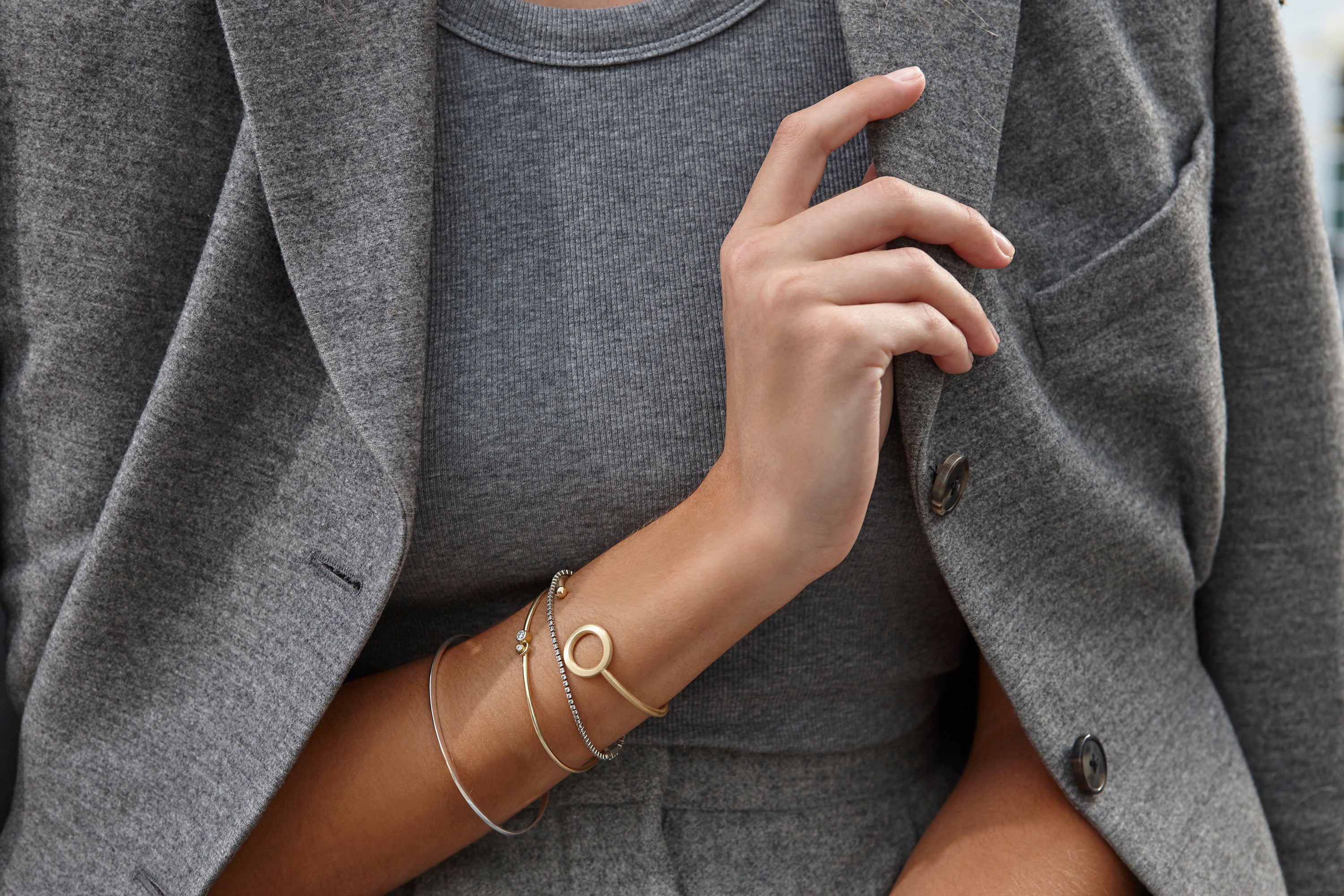
When pairing your jewellery with clothing, rose gold coordinates smoothly with neutral tones like cream, grey, navy and black, as well as earthy shades such as terracotta, moss and warm brown. Because its pink hue bridges yellow gold and silver, mixing metals across your accessories is straightforward and modern.

How Do You Keep Rose Gold Bracelets Looking Their Best?

Proper care ensures your rose gold jewellery retains its finish over years of use. Clean your rose gold pieces periodically using lukewarm water, a drop of mild washing-up liquid and a soft-bristled brush to gently remove skin oils, lotions and cosmetic residues that accumulate during wear.

Store each piece individually in a lined jewellery box or a soft fabric pouch to prevent scratching from harder gemstones or adjacent metal pieces. Remove your bracelets before swimming, exercising or applying harsh chemical products or perfumes.

Why Choose an Independent Designer?

We love independent designer jewellery because each piece is shaped by distinct artistic vision rather than mass production. The maker behind each piece decides the alloy proportions, surface finishes and clasp designs, ensuring intentional craftsmanship that stands out from commercial output.

Buying your bracelet from an independent designer means owning a piece you won’t see on everyone else, made by someone who could have taken shortcuts and didn’t.

At The Jewellery Room

Every designer is looked at closely before joining The Jewellery Room, from the quality of their design to their working practices and the sourcing claims they make. That’s why the rose gold bracelets here come from makers with genuinely different ideas about the same metal.

Why Shop at The Jewellery Room?

Every designer is handpicked by founders Pernille and Charlotte Møbjerg, from small ateliers to legacy houses, for their craftsmanship and a clear design perspective.

Detailed sizing advice, secure insured worldwide delivery and transparent product specifications make your shopping experience straightforward, and we’re here to help you choose your next signature piece.

Ask Us Anything

Got a question about your piece, your order, or anything in between? We've got answers and if not, we've got real people ready to chat.

Do solid rose gold bracelets tarnish over time?

No. Solid rose gold won’t tarnish the way silver does, and it never needs replating. Over many years of wear, the copper in the alloy can develop a very faint surface patina, but everyday dullness is usually caused by skin oils and cosmetics, which are easily cleaned with warm soapy water.

How do I determine the correct bracelet size before ordering?

Measure your wrist snugly with a flexible tape measure or a strip of paper. For a chain, charm or gemstone bracelet, add 2 to 2.5cm (about 1 inch) for a comfortable fit. Add 0.5 to 1cm (up to about half an inch) for leather or cord, or 3cm (just over 1 inch) for a looser feel, then pick the next size on the designer’s size chart. Bangles that slip over the hand are sized by hand measurement instead.

Our bracelet size guide walks through each step.

Will different rose gold bracelets match when I stack them?

Not always. Rose gold isn’t one fixed shade. More copper in the alloy gives a redder tone, so bracelets from different designers or in different purities can sit slightly apart in colour. For a close match, stack pieces from the same designer in the same purity, or let the contrast become part of the look.

Are gemstone-set rose gold bracelets suitable for daily wear?

Rose gold gemstone bracelets can be worn daily, provided you choose durable stones like diamonds or sapphires set in secure bezels or sturdy prongs. Softer stones or delicate settings need more mindful wear to prevent accidental impact damage.