


White Gold Rings Buying Guide: Fine Designer Style
Finding the right white gold ring is a balance of quality, proportion and personal taste. White gold has a crisp, cool tone that brings out the natural brilliance of precious stones. This guide explains how to choose from the independent designers featured on The Jewellery Room, covering metal purity, stone pairings and designer craftsmanship.
The short answer
A white gold ring combines pure gold with white metals, usually finished with a rhodium plating for a bright white surface. Choose 14k white gold for greater durability in daily wear, or 18k for higher gold purity and a heavier, denser feel. Match the ring to your routine: a low-profile solitaire or bezel setting suits an active day, while delicate multi-stone bands are better kept for lighter wear.
What to Look For
Karat level: 14k white gold contains 58.5% pure gold, which makes it harder and more resistant to scratching. 18k white gold, by contrast, contains 75% pure gold and has a richer weight and density.
Metal plating: Almost all white gold carries an outer layer of rhodium. This plating gives the ring its reflective sheen and protects the alloy beneath from minor surface abrasion.
Gemstone settings: Ensure the prongs or bezel walls are robust enough to protect the centre stone. Four-prong settings let in the most light, while six-prong settings or a bezel offer greater security for everyday wear.
Proportions and band thickness: Choose a shank depth and width that feels comfortable between adjacent fingers. Slender bands work well for stacking, whereas sculptural bands need accurate sizing to avoid spinning.
Understanding white gold purity and alloys
White gold is created by melting pure gold with white metals such as palladium, silver or nickel. Pure gold on its own is soft and deep yellow, so these alloys change its colour and reinforce its structure. The resulting metal is strong enough to hold diamonds and coloured gemstones securely, though prongs can loosen over time, and it's worthwhile having them checked once a year.
The choice between 14k and 18k white gold depends on whether you prioritise purity or wearability. 14k white gold is slightly harder, making it a reliable option for intricate structural details. 18k white gold, meanwhile, carries more precious metal, which gives it a denser, more substantial feel on the finger.
What to Ask Before You Buy
Is the piece crafted in 14k or 18k white gold? Check the hallmark inside the band: 585 indicates 14k and 750 indicates 18k.
What gemstone quality factors apply to this setting? For a white gold diamond ring, ask for the cut, colour, clarity and carat weight. Against white metal, a D to F colour grade is ideal.
Can the ring be resized? Some continuous eternity rings cannot be altered in size, whereas classic solitaire bands are straightforward to adjust.
How often will the rhodium plating need renewing? With daily wear, expect to have it replated roughly every one to two years.
What to Watch Out For
Don't size a wide, chunky white gold ring by how a narrow band fits you. Broader bands cover more of the finger, so they usually need around half a size larger to stay comfortable as temperatures change.
Be mindful of exposed stone points. Pear-cut stones need a protective V-shaped prong at the tip to prevent accidental chipping. It's also worth wiping lotion and soap from behind the setting, since build-up stops light from passing brilliantly through the stones.
Style guide: Popular white gold ring designs
White gold serves as a pristine backdrop for single-stone settings and elaborate multi-gem designs alike. Its cool tone keeps the centre stone as the focal point, with no warm colour reflected from the surrounding prongs.
Whether you choose a classic white gold solitaire or a strong sculptural band, matching the silhouette to your hands and wardrobe is what makes a ring you'll keep reaching for.
Gemstone pairings: Diamonds, sapphires and emeralds
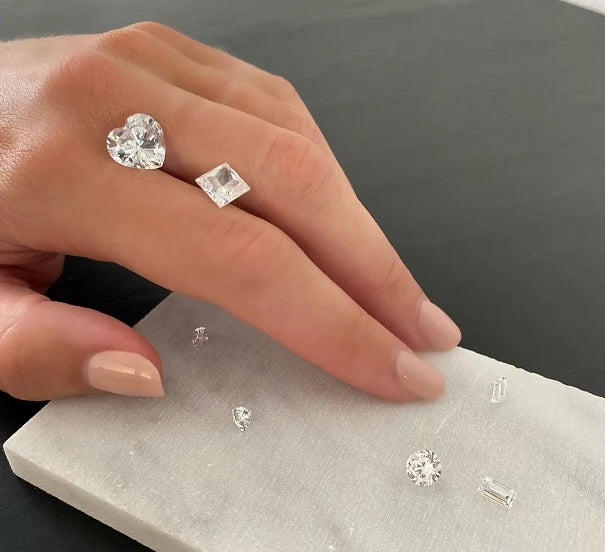
Diamond in white gold remains a classic engagement ring pairing, because the white metal brings out the icy brilliance of colourless stones. If you want the diamond to carry the whole design, a white gold solitaire ring keeps the focus entirely on a single stone.
Colour contrast is another strength of this metal. A light sapphire set in white gold reads as fresh and wearable, while a deeper blue stands out more sharply against the bright metal. A white gold emerald ring, meanwhile, gives the vivid green a more modern, graphic feel than yellow gold would.
Bands and statement shapes: Modern alternatives
If you are choosing white gold wedding rings as a couple, the balance is usually between sleek plain bands and diamond-set eternity styles. A white gold engagement ring and a matching wedding band sit neatly together as a seamless bridal set.
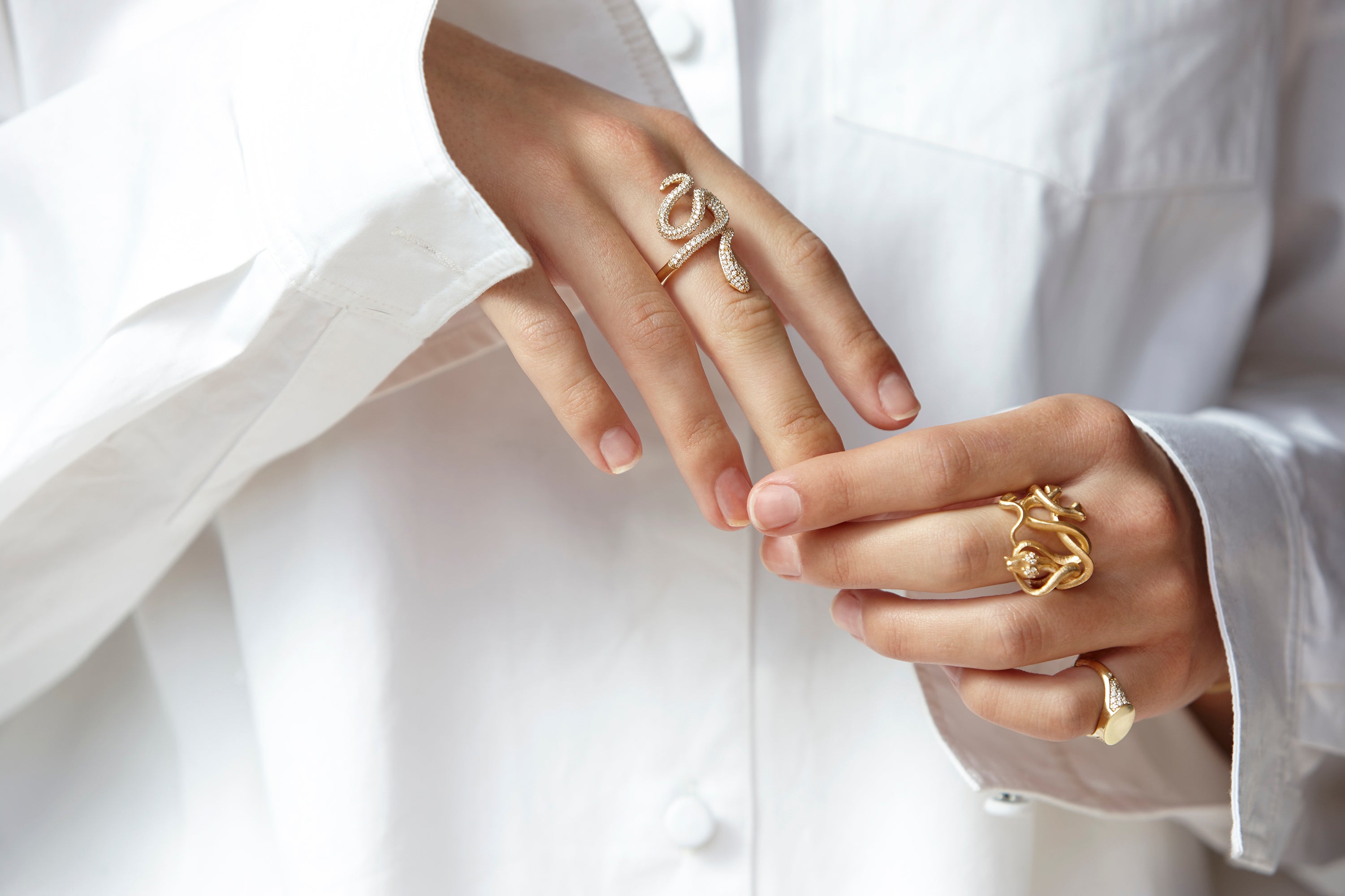
Beyond bridal styles, chunky white gold rings bring sculptural presence. These broader, heavier pieces work well worn alone on the middle or index finger. A white gold ring with fluid curves or pronounced geometry lets the metal's high polish take centre stage.
Why Choose an Independent Designer?
Choosing fine jewelry from an independent designer gives you a piece with a distinct point of view, set apart from mass-market production. Independent goldsmiths focus on original proportions, hand-selected gemstones and careful bench finishing.
Many work in small batches and set stones by hand. That attention shows in the details you feel every day: a comfortably contoured inner band, secure prongs and a weight that sits evenly on the finger.
At The Jewellery Room
The independent designers featured on The Jewellery Room are carefully selected for their craftsmanship and original design.
From minimalist Scandinavian goldsmiths to forward-looking European ateliers, their work covers many interpretations of fine metalwork. You can explore delicate stacking styles or bolder artistic pieces in the same place.
Selected Designers
Every designer featured on The Jewellery Room is chosen personally by Pernille and Charlotte Møbjerg, not because they fit a trend, but because of what they make. Some earned their place through craft, some through individuality, and some because nothing else looked quite like their work.
That's why the white gold rings here were never chosen to match. They come from different designers, different cities and different stories, from small ateliers to legacy houses.
Why Shop at The Jewellery Room?
The Jewellery Room exists to champion independent jewelry design: jewelry made by someone, not something, and meant to last. It isn't a one-stop shop that has everything and stands for nothing. It's a curated destination, where designers are carefully selected and the relationships with them are nurtured over time.
Pernille and Charlotte have said no to many designers along the way. The ones featured here could have taken shortcuts with their rings, and didn't. If you're not sure which ring is right for you, the team is here to help you choose.
Ask Us Anything
Got a question about your piece, your order, or anything in between? We've got answers and if not, we've got real people ready to chat.
Does white gold tarnish or change colour over time?
White gold does not tarnish, but its rhodium plating gradually thins with everyday handling, revealing the slightly grey-yellow tone of the gold alloy beneath. Plain bands can be replated to restore the original mirror-like finish.
Can I wear a white gold ring every day?
Yes, white gold in both 14k and 18k is durable enough for daily wear. Take your ring off for heavy manual work, swimming or harsh cleaning chemicals to protect the metal and stones.
How do I clean my white gold diamond ring at home?
Soak the ring for 15 minutes in warm water with a few drops of mild washing-up liquid. Gently clean behind the setting with a soft-bristled toothbrush, then rinse in clean water and dry thoroughly with a soft cloth.
Is white gold suitable for sensitive skin?
It depends on the alloy metals used in the material. Some white gold contains nickel, which can cause reactions, while white gold made with palladium or silver avoids it. So if you have a known sensitivity, check the product details for the metals used.
Related guides
-
Read moreChoosing a White Gold Necklace: Material, Chain types, Lengths and Styles
White gold necklace guide: 9k, 14k or 18k, rhodium plating explained, which chain links hold up...
-
Read moreFinding a Gold Bracelet That Lasts: Purity, Fit and Clasp Quality
Gold bracelets that last: compare 9k and 18k for daily wear, check clasp security and wrist...
-
Read moreGuide to Choosing a White Gold Bracelet
White gold bracelet guide: choose between 9k, 14k and 18k, check wrist fit and link strength,...
-
Read moreGuide to Choosing White Gold Earrings
White gold earrings: compare 9k, 14k and 18k, understand rhodium plating and hallmarks, and choose studs,...
Visit our showroom in Copenhagen
Around 15 of our designers are on show at any one time, and you can shop pieces directly from the showroom.
Customer service
Contact
The Jewellery Room ApS
Bredgade 35, 1260
København, Danmark
VAT no. DK32285732
+45 53 69 15 50
customercare@thejewelleryroom.com
Our Room
Every designer in The Jewellery Room is chosen by Pernille & Charlotte, personally. Not because they fit a trend, but because of what they make.
From small ateliers to legacy houses, who makes a piece matters as much as how it's made.
We don't carry everything. We carry what we believe in: pieces made by designers who could have taken shortcuts, and didn't. That's what you'll find here, and we're here to help you choose
Step inside The Jewellery Room,
The Global Home of Designer Jewelry.
social
Copyright © 2026, The Jewellery Room. All rights reserved.


