

Skip to content

Cart

Your cart is empty

Selecting a Gold Necklace: Understanding Purity, Chains, and Lengths

A gold necklace rests against your skin every day, so its construction matters far more than how it photographs. A delicate gold chain behaves very differently from one with a chunky link, and over years of daily use, 9k, 14k, and 18k gold necklaces age at noticeably different rates. This guide covers everything you need to check before buying a gold chain or pendant, including gold purity, structural durability, and the lengths that best complement different necklines.

Charlotte Charlotte

The short answer

For a piece worn daily, 9k gold (sometimes mislabelled 9ct) offers the most durable, practical option for everyday resilience. If you prefer a richer colour and higher gold content, 18k gold is ideal, though it is softer and best suited for occasional wear pieces worn with care. 14k gold sits comfortably between the two.

As a rule, a heavier chain holds its shape much better over time than a very fine one. Always match the weight of the gold to your lifestyle and wear frequency, rather than relying solely on product photos.

What to Look For

Three things determine whether a gold necklace is worth the price: purity, chain construction and clasp quality.

  • Purity: the hallmark (375 for 9k, 585 for 14k, 750 for 18k) confirms actual gold content
  • Construction: solid gold, gold vermeil (a substantial gold layer over sterling silver) and gold-plated (a thin layer over base metal) wear very differently against skin
  • Clasp: a lobster or spring-ring clasp should open and close smoothly under light finger pressure; a stiff clasp on a new piece is worth questioning before you buy

Choosing Your Gold Chain: Curb, Cable and Box Links

A curb chain, with its interlocking twisted links, is the classic base for a chunky gold necklace and holds its shape well through everyday use. A cable chain, simple round or oval links in an alternating pattern, is the most versatile choice for a gold chain necklace worn on its own or layered. A box chain, made of neat square links, gives a cleaner, more contemporary line and suits a thin gold necklace particularly well.

What to Ask Before You Buy

Ask three things before buying:

  • The exact gold purity
  • Whether the chain is solid gold or vermeil or plated
  • Whether the clasp and any jump rings are made in the same purity as the chain.

A seller who can answer all three clearly, rather than describing the piece only as "gold," is one worth trusting further.

What to Watch Out For

The biggest risk is a listing that says "gold" without stating purity or construction. A gold-plated chain over brass can look identical to solid gold in a photo, then discolour at the clasp within a year of daily wear. Treat a "24 carat gold necklace" or "gold chain 24 carat" advertised for everyday wear with real caution: 24k gold is too soft to hold its shape in a chain that will be handled daily, which is why it's used for bullion rather than jewelry.

Gold Purity in 9k to 18k Necklaces Explained

A 9k gold necklace (37.5% pure gold) is the most durable of the common purities and the most affordable route into solid gold. 9k gold pieces are a genuinely sound everyday choice, not a lesser one. 14k (58.5% pure) sits in the middle, slightly paler than 18k and more resistant to daily knocks and scratches. 18k (75% pure) gold necklaces give the richest colour, which is why most designer necklaces on The Jewellery Room are crafted in 18k gold.

Gold chains in 18k and above show marks more easily than lower purities, since the metal is softer. If you want the richer colour of 18k with more daily resilience, look for a slightly heavier chain gauge rather than dropping to a lower purity for durability's sake.

Styling: Chain Length, Pendants and Layering Gold Necklaces

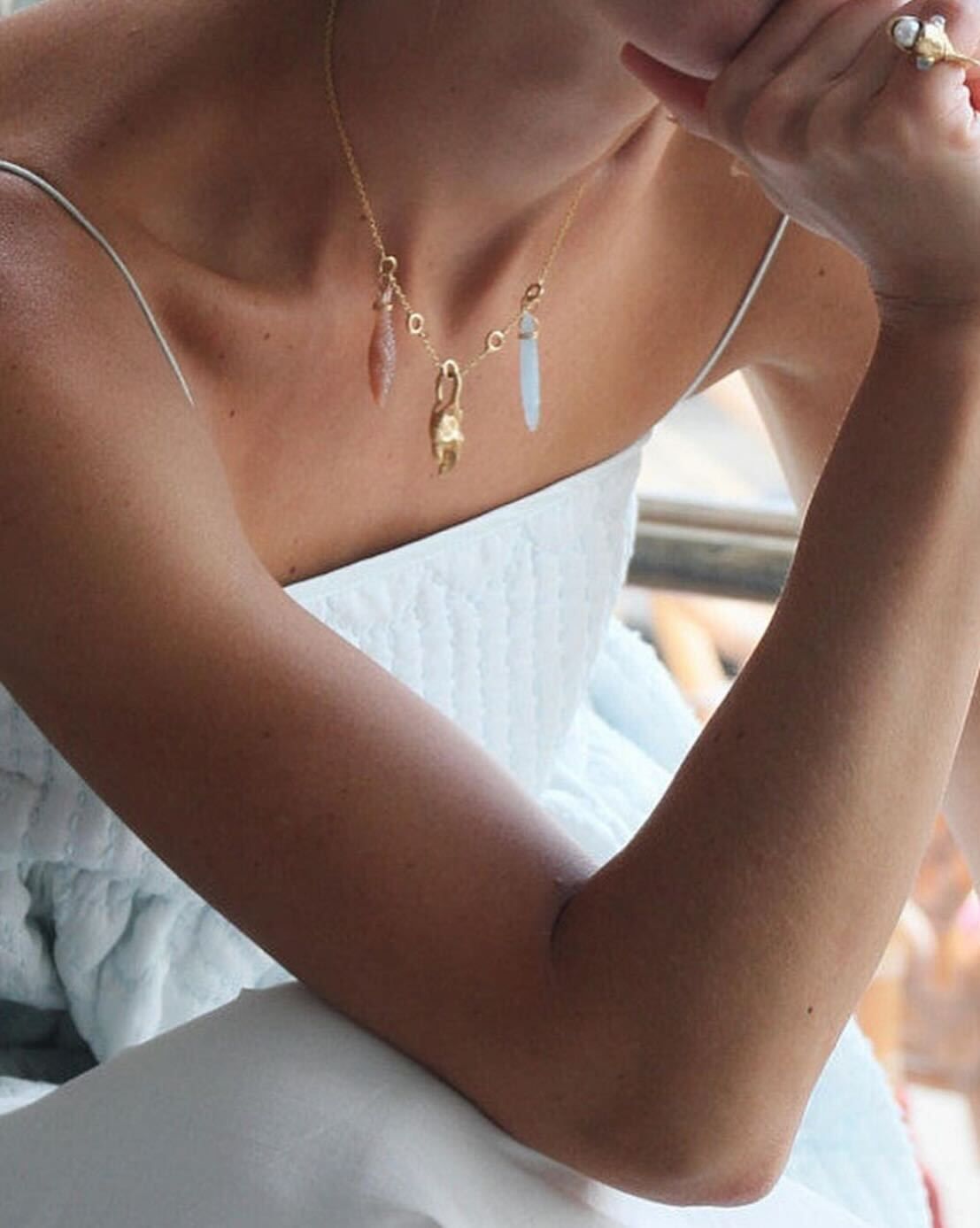
A gold pendant necklace, whether it's a simple disc or an infinity gold necklace design, works best on a chain long enough to let the pendant sit clearly on the chest rather than crowding the collarbone. A gold necklace with pearl elements bridges classic and contemporary styling, since pearl looks warm against yellow gold in a way it doesn't against silver.

For layering, choose necklaces of genuinely different lengths, such as a collar-length piece with a princess-length pendant, so each one is visible rather than overlapping. A long gold necklace or a rope-length chain works well as the outer layer, worn doubled or left long, over one or two shorter pieces.

Caring for Your Gold Necklace

Solid gold necklaces are low-maintenance: clean with mild soap, warm water and a soft brush, and ultrasonic-safe as long as they are not set with porous stones like opals or turquoise. Gold vermeil and gold-plated necklaces need more care, since the gold layer is finite.

A real gold necklace should still be taken off before swimming, exercise or sleep, since chlorine and repeated friction degrade a clasp and its links faster than everyday handling alone. If a necklace includes a pearl, apply perfume and hairspray before putting it on, not after.

Why Choose an Independent Designer?

An independent designer working in gold necklaces has to get the fundamentals right without a heritage house's scale behind them, so every purity claim and clasp choice reflects their own standards directly. That accountability tends to show in the detail of the chain itself, not just the pendant. Buying from a designer selling via The Jewellery Room means the designer's name is also the name behind the piece.

It also means real variety in chain construction. Independent designers each favour different links, weights and clasp styles, so choosing among them is closer to choosing a point of view on how a chain should feel than browsing a single house style.

At The Jewellery Room

The designers selling via The Jewellery Room work predominantly in 18k and 14k gold, each bringing a distinct approach to the chain and the pendant. A few worth knowing:

Selected Designers

Dulong Fine Jewelry: Known for the Piccolo collection of refined chains with a signature golden clasp, combining exclusivity with a genuinely playful design language.

Nord By Thomsen: Delicate gold chains with symbolic patterns, crafted in 14k and 18k gold by goldsmith Mette Nordby Thomsen in Copenhagen.

KINRADEN: Solid 18k gold, sterling silver and mpingo wood only, for necklaces built on restraint rather than decoration.

Why Shop at The Jewellery Room?

The Jewellery Room exists so a gold necklace from an independent designer is as easy to find and verify as anything from a conventional retailer, without losing what makes that designer's work worth choosing. Every designer featured here is selected with intention, and purity and chain construction are part of that standard.

That means moving from a fine 9k gold necklace to a chunky 18k curb chain across dozens of designers in one place, with the confidence that every piece was chosen with intention, not just listed to fill a category.

Ask Us Anything

Got a question about your piece, your order, or anything in between? We've got answers and if not, we've got real people ready to chat.

What is the best gold purity for an everyday necklace?

For a necklace worn daily, 9k or 14k gold is usually the more practical choice, since the higher alloy content makes the chain more resistant to scratches and stretching than 18k. An 18k gold necklace gives richer colour and higher gold content, better suited to occasional wear. Neither is objectively better; the right purity depends on how often you'll actually wear it and the colour of gold that appeals to you the most.

What's the difference between a 9k and an 18k gold necklace?

A 9k gold necklace is 37.5% pure gold, alloyed for strength and durability; an 18k gold necklace is 75% pure, giving a richer, warmer colour but slightly softer wear characteristics. Both are solid gold; the difference is the proportion of pure gold to alloy, not authenticity. 9k is the more common standard for everyday chains in the UK.

How can I tell if a gold necklace is real gold?

Check for a purity hallmark on the clasp or a nearby link, typically 375 (9k), 585 (14k) or 750 (18k). The listing should state solid gold, gold vermeil, or gold plated explicitly; if it only says "gold" with no purity or construction detail, ask before you buy. A genuine solid gold chain also carries more weight than a plated chain of the same length and style.

What length should I choose for a gold necklace?

It depends on where you want the necklace to sit and what you're layering it with. A choker (14 to 16 inches) sits close to the neck; a princess length (17 to 19 inches), the most common length, falls just below the collarbone; a matinee (20 to 24 inches) sits on the upper chest. If you're wearing a gold pendant necklace on its own, princess length is the safest everyday choice, since it works with most necklines without competing with a collar or crew neck.